Tufts University Food is Medicine Summit 2025 Series
Part 7: When Healthcare Prescribes Healthy Eating
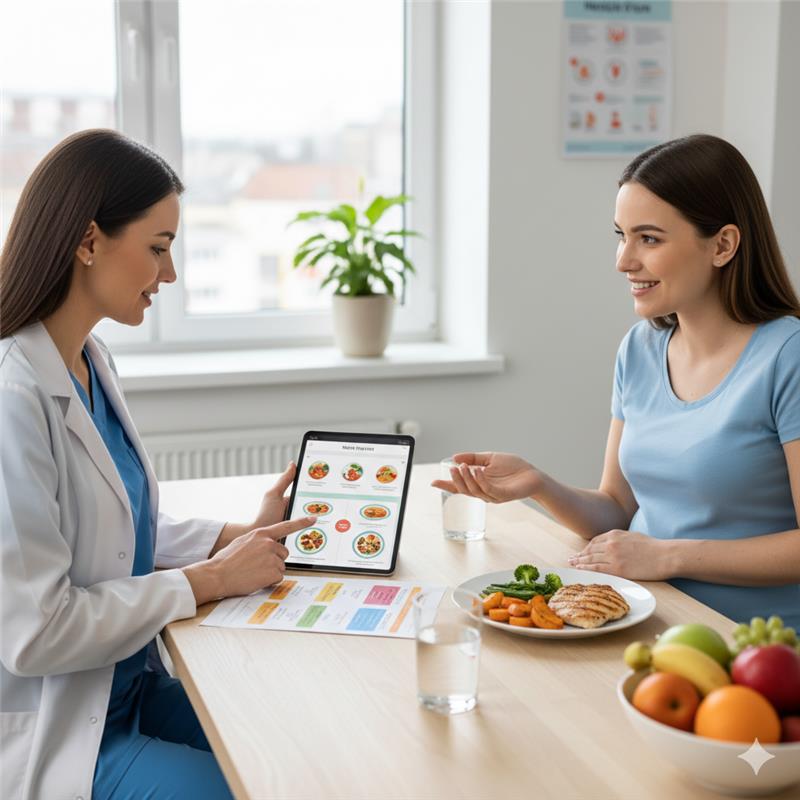
What if your doctor could prescribe fresh groceries instead of just pills? That vision is becoming reality as healthcare systems across the U.S. integrate Food as Medicine programs, bridging clinical care and nutrition to improve patient outcomes and community health.
At the recent Food as Medicine panel at Tufts University’s 2025 Summit, patient advocate Ann Swan shared how a simple flyer changed her life. After years of struggling to manage diabetes, she joined a Food is Medicine pilot through Appalachian Regional Healthcare.
Every week, healthy meal kits arrived at her doorstep through a partnership with DoorDash and Food City. In just 12 weeks, Ann lost 13 pounds, lowered her A1C, and gained new confidence in managing her condition.
“Food is medicine,” she said, not as an idea, but as lived experience.
From Pilot to Policy: Health Systems Lead the Way
Healthcare leaders from CVS Health, Devoted Health, and Kaiser Permanente are taking lessons from stories like Ann’s and turning them into scalable, sustainable programs:
CVS Health is investing in Atlanta to address food insecurity and chronic disease, cutting blood pressure and A1C levels for nearly half of participants.
Kaiser Permanente launched its Food as Medicine Center of Excellence, transforming pilot projects into nationwide care models.
Devoted Health continues to embed nutrition-based care into preventive medicine strategies.
Across the industry, a shift is underway: nutritious food is being recognized not as a lifestyle perk, but as a clinical intervention that prevents disease, reduces costs, and enhances quality of life.
As one panelist summarized, “The future of healthcare doesn’t just treat illness, it delivers health.”
Scaling Nutrition-Based Care
Food as Medicine programs are proving that small interventions can drive big outcomes. But for these efforts to grow beyond pilots, standardization, data integration, and payer alignment are critical.
That’s where innovation platforms like Nurish’d are helping healthcare organizations operationalize Food as Medicine within existing care models.
How Nurish’d Helps Bring Food Prescriptions to Scale
At Nurish’d, we work with health systems, insurers, and community partners to make Food as Medicine programs scalable, measurable, and equitable.
Our platform enables organizations to:
Prescribe food as care, integrating medically tailored meals and grocery benefits into clinical workflows
Connect payers and providers through shared data systems that track eligibility, adherence, and outcomes
Support diverse populations through localized food delivery partners and culturally relevant meal options
Measure ROI by linking nutrition interventions to health outcomes and cost savings
By uniting clinical teams, payers, and community food systems, Nurish’d helps move Food as Medicine from concept to care standard, so that food prescriptions can become as routine as medication ones.
Looking Ahead
The momentum is clear: as healthcare embraces nutrition-based interventions, the boundary between medical care and daily life continues to blur. Food as Medicine isn’t just reshaping treatment, its redefining prevention, equity, and community health.
At Nurish’d, we’re proud to help make this transformation possible, providing the technology and partnerships that connect patients, payers, and providers through the simple but powerful act of nourishing care.
Because healthier communities truly start at the table, and when food moves to the center of care, everyone benefits.